Bathroom Music Videos

Bathroom Music Videos
by Sue Basko

A bathroom makes live music sound so good.

Barenaked Ladies - One Week


Wax - "Need"


Elliott Smith - "Between the Bars"


Lykke Li


Beatbox in New Bathroom


Brandy - "A Change is Gonna Come"


Pigeon John - "Davey Rockit"


Demo Reels - Why and How-
with Darryl Harbeck


Demo Reels - Why and How - with Darryl Harbeck
by Sue Basko, esq.

A demo reel is a short video that edits together the highlights of the best work of an actor, or of a film director, editor, lighting person, set decorator, etc. If you are thinking of getting a demo reel -- this blog post is for you!

Today's special blog guest is Darryl Harbeck, of Hollywood, California, owner of Suntopia Films and Anexo 56, a new international computer motion graphics company. Darryl and I have been friends for many years. Darryl is a very good video editor and cameraman, but he also knows the other side of the business. Darryl's best friend growing up is now a very successful comedy writer. Darryl studied comedy improv at the Players Workshop of The Second City. Lately, he has produced and directed video for the famous Stella Adler Academy of Acting and Theater in Los Angeles. He also studied acting in the school's intense classes.

Darryl has made demo reels for some of the best actors in Hollywood. Darryl is the go-to guy for managers and agents who want to get their clients a demo reel that is top-notch. I've watched Darryl at work making demo reels. I've seen the effort he goes through to pull out the best of the actor's work and turn it into a little gem.

"Demo reels" used to actually be reels of film, but now, they are DVDs and video on the internet. Click here to see some demo reels made by Darryl. If you view all 11 videos on the page, you'll have a good idea of the possibilities. You can get Darryl's contact info right there on the site, too, or email: Darryl@SunTopiaFilms.com

I threw some questions at Darryl, and he came up with helpful answers:

Sue: WHAT MAKES A GOOD DEMO REEL?

Darryl: A good reel shows the acting range of the actor in a very quick manner. An average reel can run 2.5 to 3.5 minutes, however, it's very common for reels to run even shorter.

A good editor is always looking for ways to cut long shots, shots on other actors, cut-aways and trim the dialogue of other actors to the bare minimum. Dramatic pauses may work for your movie, but they're cut down or removed for a demo reel. Foul language, gore and nudity is generally avoided.

Thinking of saving your best scene for last? Think again. Most people won't watch the whole reel. Put your best stuff right up front, shorter scenes first. This way, whoever is watching sees more of your best work in the shortest amount of time.

Avoid video and headshot montages to music. That's old school and just annoys people. Get right to the work, that's what people want to see...can you act, and what type(s) are you? The one exception to making a montage might be if you have a few "special talents" that you can show in short order (stunts, horseback riding, fire eating etc).

Don't make the mistake that many do...saving up material until you have enough to make a "brand new" reel. Rather, as soon as you get a new scene worthy of your reel...get it on there.

People want to see your latest and greatest. Your demo reel is ever changing, ever evolving...that is until you are a super star and don't need one anymore.

Sue: A BEGINNER COMES TO YOU FOR THEIR FIRST REEL. WHAT DO YOU WANT THEM TO HAVE AND IN WHAT FORMAT?

Darryl: I always prefer to work with the actor during the edit rather than them just dropping stuff off. Working together is more collaborative and more productive....and more cost-effective.

Actors should review the material in advance, make selections and write down the time-codes of where to find each scene on the file or DVD. Try not to identify more than 10-15 minutes of material that we'll be working with. Remember, you're cutting it down to a couple minutes and the editor doesn't need to see every frame of film you've been in.

If you have computer files of your work, bring them, but also bring a regular "playable DVD" as a backup (if you have it). That's a playable DVD that plays on a DVD player (not your computer).

Sue: WHAT DO THEY WALK AWAY WITH?

Darryl: You get a DVD Master. You can make copies from that on your computer, or have me make them for you.

You also get a digital internet version that you can upload to website of your choice (Actors Access, Youtube, Vimeo, your website...wherever). Then just send the link to the people that you want to view your reel.

Sue: HOW IMPORTANT IS IT TO HAVE A DEMO REEL? WHO DOES THE ACTOR GIVE ONE TO?

Darryl: Usually the first thing an agent, manager, casting director, producer or director will ask an actor is, "Do you have any tape on your self?". That's them asking for your reel. If you are prepared, you say "Of course". If not, you just sort of stammer and stutter. Demo reels don't "usually" get you an acting gig, but they can get you a meeting or an audition.

Sue: WHO ELSE HAS A DEMO REEL BESIDES ACTORS?

Darryl: Directors, Set Designers, Music Supervisors, Dancers, Stand-up Comics, Stunt People, Special Effects People....whoever wants to show someone else their work.

Sue: WHAT IS THE IDEAL DEMO REEL FOR ADVANCED BEGINNER?

Darryl: The same for everyone...one that shows your latest and greatest in short order.

Sue: DO DEMO REELS DIFFER REGIONALLY?

Darryl: Not really.

Click here to see some demo reels made by Darryl. If you view all 11 videos on the page, you'll have a good idea of the possibilities.

You can get Darryl's contact info right there on the site, too, or email:

Darryl@SunTopiaFilms.com

You may also want to read these related posts:

Rob Adler on Acting, Teaching Acting to Children and Adults, Games, and Other Thoughts

Terry "Trademark" Martin and 40 Hz Productions: Beats, Samples, and Recording


Terry "Trademark" Martin and 40 Hz Productions:
Beats, Samples, and Recording
by Sue Basko, esq.

Terry "Trademark" Martin runs 40 Hz Productions as a joint effort with Max-a-Million and Morris Mills. 40 Hz Productions is a boutique or mini-recording studio, tucked into a room in the much larger Paragon Studios in Chicago's Fulton Market District, just northwest of the downtown Loop area. The trio are known for making dance pop or rap dance music, creating beats and samples, and for loving pancakes -- but that is a slightly different topic.

If you want to create music and you're not quite fully formed on your songs, Terry can help pull it together by creating beats, coaching vocals, and polishing a recording with instrumentals.

Terry has been so kind to answer my probing questions:


What's the name of your production and recording company and who is involved?
40 Hz Productions is myself, Max-A-Million, and Morris Mills.

Your studio is small but sweet. What do you have in there?

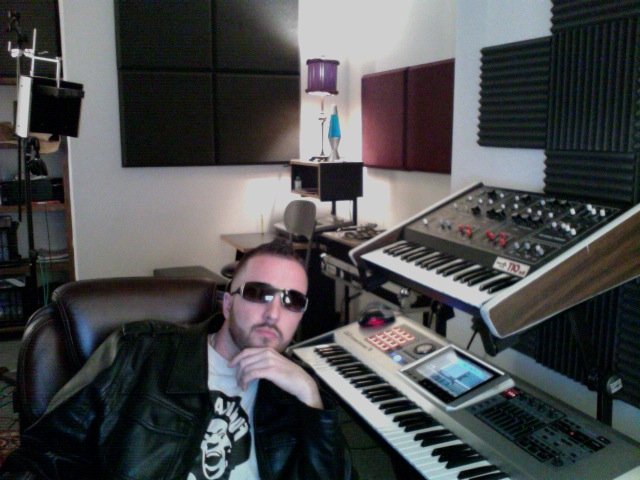
I have an Apple iMac running Pro-Tools 9 with all kinds of industry standard plug-ins. My main music production tools would be the Roland Fantom G6 and Akai MPC 2500. For recording, I use an Avalon channel strip with high quality condenser microphones.

You make beats and samples. Tell me about this process.
I create my samples from old records, drum machines, synthesizers, and any sounds I can capture with my iPhone. That way when I have an idea, I'll have a collection of sounds to play with and mold them into a beat.

How about making beats and samples to order, for a client?

I'm constantly adding new material to my library but I can also create custom tracks for clients. Give me the idea and I'll paint the picture.

Did you attend school for recording?
Yes, I'm a Full Sail University graduate of 2003. I studied recording arts there.

What are some of your favorite projects that you've worked on?
Anything with Max-A-Million is a pleasure. He's my music mentor and we always have a great time in the studio. Recording the Legendary Drifters was also a wonderful project to be part of.

If someone comes to you and sort of vaguely wants to record some songs, but they are not sure what, can you help them out?
Most definitely. I believe I can take someone's ideas and help them create their masterpiece.


Can you create music?
Yes, I compose and produce all kinds of music.

Do you play any instruments?
Yes. I play guitar, bass, keyboard, and drums.

What led up to where you are today?
A love for music. Creating and helping others create.

Let's talk about that pancake song. It's clever. How did it come about?
Thanks. I like pancakes. One night it just came out lol.

Can you see making songs for commercial sponsors? Writing songs to order?
Totally. I would love to do that. Stuff like that just comes naturally to me.

Times are tough financially. Got any deals going?
$100 for 4 hours of recording/mixing time.

What are your life goals?
To create the best music I can.

What are your favorite mind-expanders?
I find inspiration in film, traveling, and art. That's when I get out of the studio of course.


Terry TradeMark Martin
40 Hz Productions
(708) 415-1119
Terry@40HzProductions.com

Five (5) Ways to Kill a Rock Band


Five (5) Ways to Kill a Rock Band
by Sue Basko, esq.

Rock bands, other musical groups, and solo acts are sometimes (often) on a path to limited success or outright self-destruction. My observations of many music acts leads to this list:

1. The singer cannot really sing. The singer does not realize he or she cannot really sing. No one will tell the singer he or she cannot really sing. The singer gets to be the singer, because the singer is: a) a solo act; or b) the one that started the band; or c) the one that declared himself or herself as the singer, due to being popular, cute, or feeling singer-ish; d) the one with the car, money, practice space, or other necessary ingredient.

2. A boyfriend or girlfriend gets involved in running the act. This is almost always disastrous. It is hard enough to run a relationship, but having one entangled in with a musical career will likely lead to disaster. Do you notice your popularity waning? It's because no one wants to deal with the toxic boy/girlfriend. If people must approve of your boy/girlfriend to like your act, you are doomed. If bookers, managers, or fans have to jump through hoops created by a jealous/ protective/ control freak/ clingy boy/girlfriend -- they won't. On the flip side -- parents often make very good managers for a musical career, especially if they have some background in music or entertainment.

3. Someone is causing trouble by abusing drugs, alcohol, or having personal problems. Someone is arguing, not showing up, not practicing, being late, etc. The person needs to take care of the problem, and the sooner, the better.

4. Someone is a control freak. Someone is stopping up creativity, hampering friendly public relations, stressing people out, irritating venue owners and audio people, and in general, limiting the flow by trying to control everyone and everything.

5. Too much other responsibility. Jobs that do not allow the freedom needed to be in a musical act, marriage, kids, mortgages - all these usually limit one's ability to engage fully in a musical career. If a person can only give a few hours a week to the music career, it is not going to go too far.

-- Sue Basko suebaskomusic@gmail.com


Picking a Name for Your Rock Band


Picking a Name for Your Rock Band: 7 Rules
by Sue Basko, esq.


When you start a rock band, you choose a name for it. You should do this strategically so it enhances the future of the band, rather than causing problems. In this article, I give some general rules, and many of these rules also apply to choosing a stage name for a singer, or even to picking a name for a movie, company, or website. The information here should be helpful, but it is not legal advice for anyone’s particular situation. To get that, you would need to speak directly with a lawyer.

If you choose a name and it must be changed later, you then lose the goodwill, name recognition, booking power, following, and sales power that you had built up associated with the band name. This can be a big deterrent for a record label, agent, manager, or touring company that is considering signing your band. Their lawyers know you have to change your name and the question arises whether you are going to be able to build up your same “fame” afterwards, and how long it is going to take. There is the additional problem that legal work, such as contracts, have used the band name, and all that is going to have to be adjusted. A band that needs a name change is not likely to be signed, period.

RULE 1: Pick a name that is not being used or has not been used by another musical band.

HOW TO: You should pick a name that is not the same or similar to any other band in rock or any other genre, in use anywhere that you can find it in the English-speaking parts of the world. Google extensively on the internet, on all possible spellings of the main words.

WHY: You must choose a name that cannot be confused with any other group, for purposes of booking and promotion. You need a name that you can trademark if you decide to do so. If a record label or promotion or touring company wants to sign your band, they will make you change your name if it can be confused with another group. Also, if the other group notices you are using their name, they can force you to stop using it.

RULE 2: Pick a name that has not been used by any other rock band in the past, even if that band is no longer operational.

HOW TO: Some more very in-depth Googling, searching on youtube, asking music geeks.

WHY: Chances are, someone still owns the rights to that name or uses that name for some purposes, such as song publishing, band reunions, vintage merch, etc.

I have seen instances where a big band in the swing music genre or a jazz band uses the name of its famous leader. When the leader dies, sometimes the band continues on using the name. For example, I think this is the case with The Artie Shaw Orchestra. This will be a situation where the right of publicity and trademark/ service mark to use the name must reside with either the group or with an ownership entity of the group, such as a company. If you are looking ahead, it makes sense to plan for the death of the namesake leader, so that his or her music can live on in the best way to continue to please audiences. This is best done with legal paperwork done in advance, rather than with lawsuits after the fact.

RULE 3: Pick a name that is not the same or similar to that of any band you were ever in before, whether that band is still operational or not.

HOW TO: Be honest. If you were in a band called “Hopscotch,” you cannot name your new band “Hop Scotch.”

WHY: Every rock band is a business entity and in most cases, the name belongs to the entity and not to any given band member. There are some exceptions to this, such as when a “band leader” (or core unit) starts and organizes a band and maintains a sort of ownership control over the band. Then, as the peripheral band members come and go, that band leader will keep the same band name. An example of this is The Rolling Stones.

However, one band member, or one of the core group members, cannot form a new band and take the name.

However, still, ownership of the name may reside in the group as a whole. This is where a lawyer should definitely be consulted. Example on this rule: The name “Pink Floyd” has been trademarked and is owned by a business entity and not by any given person. Roger Waters has lately been touring as “The Wall.”

This situation can become very sticky when one or more members of a defunct band want to reunite and/or add other musicians, and perform for a “comeback” tour. If ownership of the name has not been clarified legally, this often results in lawsuits and/ or hard feelings. It can also result in audience disappointment. Anyone thinking of forming such a comeback should consult a good lawyer. Anyone forming a band now should think ahead to such future possibilities and choose the right name and have the paperwork done properly from the get-go.

Some "comebacks" are not really so. For example, a few years ago, there was a band that was said to be a comeback of The Byrds. This band had none of the original members and its connection to the influential 1960s California band was tenuous. When called on this, the band said it did not actually use the name "The Byrds," but "The Byrds Celebration." The fine line between being a cover or tribute band, and pretending to be the real thing, had been breached. See Rule 7 below for Cover bands.

If the band name itself contains the actual or stage name(s) of the band members, and if one or more of those band members leaves the band, then the legally correct thing to do is to change the name to reflect the membership. The legal rules behind this may include trademark, right of publicity, and in some cases, fraud. Examples: “Simon and Garfunkel” is only Paul Simon and Art Garfunkel performing together, and could not be used by either of them for their solo career or other bands. The same with “Sonny and Cher.” If Dave Matthews were no longer performing, no one should be selling tickets to the “Dave Matthews Band.”

RULE 4: Pick a name that is not used or owned by any other company or organization of any type.

HOW TO: Google extensively. Also, have a lawyer do a trademark search.

WHY: So you are not possibly violating anyone else’s trademark or other rights. Also, to give yourself maximum SEO (search engine optimization). If you have a unique name, a search on your name will likely place you on top.

RULE 5: Pick a name that is not the same as or cannot be confused with the name of any product, movie, TV show, book, comic book, character in any kind of book or show, the name of any other person, etc.

HOW: Google, google, google. Trademark search.

WHY: So you do not violate anyone’s trademark, copyright, right of publicity, privacy rights, or anything else. You might think it is cute to name your band after a Disney character, but Disney lawyers will let you know fast and firmly that it is not acceptable.

RULE 6: If you want mainstream success to any extent, pick a name that is not profane, violent, racist, sexist, offensive to any religion, apparently Satanic, or in poor taste, either in words or implication.

If a major goal of your music is that you want to shock, offend, or appeal to a limited audience while scaring away others, then you may want to choose a name that shows this. However, your band is likely to be banned from college campuses, high schools, community festivals, city-sponsored events, church-sponsored events, performances in stores and shopping malls, radio airplay, performing or use of your songs in advertising, placing your own ads in most media (they have standards), many commercial venues, websites, contests, online music sales sites, etc.

What about NWA or the Dead Kennedys, you may ask. They did not make it to huge mainstream success, and they began many years ago. In the intervening years, society has become much more concerned about appearing to treat others with civility, as well as with the perceived dangers of rock music. The influence of certain rock groups has been named as a factor in writings regarding school shootings, murders, and suicides. If, after considering all this, you still insist on calling your band the Satanic Nazi Marines, or The Defective Sperm, by all means, give it a whirl.

RULE 7: If you are a cover band or tribute band, pick a name that cannot confuse anyone into thinking you are the real band. A cover or tribute band is a band that performs and/or records the music of a famous band. Sometimes the cover band will try to look, act, and sound like the famous band, in which case, it is a tribute band. There are many Beatles tribute bands. If the famous band is still performing, great care must be taken not to violate their copyrights, trademarks, rights of publicity, etc. A lawyer must be consulted. If the famous band is not still performing, great care must also be taken.

HOW: Pick a name that does not use the actual words from the name of the original band, the name of any of their songs, or anything that sounds similar. The band also cannot use the name of the original band in advertising. For example, there is a successful Beatles tribute band in the midwest called "American English." That name is a good choice, because it does not confuse and yet implies what type of music will be played. There is a Grateful Dead tribute band from Florida called "Uncle John's Band." That is skating on thin ice, because that is the name of a Grateful Dead song. There is a Led Zeppelin tribute band in Los Angeles called "Led Zepagain" that records and performs the songs of the original band. If Led Zepagain has not licensed use of the Led Zeppelin name, (and their website gives no indication that they have), I would expect the lawsuits to fly any time now. Why? Violation of trademark, violation of service mark, violation of right of publicity.

There are instances where a famous rock band will license out use of its name to a tribute band. For example, right now, there is a touring show called Led Zeppelin 2. I do not know for a fact, but I am certain this touring group must have contracted with the real Led Zeppelin to use their name for this tour. Otherwise, the owners of the Led Zeppelin name could sue them.

Led Zeppelin 2 is a group of highly talented musicians, mostly from Chicago. From the photos and videos, I'd say most of them are wearing wigs and trying to look like the real Led Zeppelin from that band's heyday. It looks like Led Zeppelin 2 puts on a very good show musically. You can bet that the real Led Zeppelin is making money on each ticket. My guess is that some unwary ticket-buyers probably think they are going to see the real Led Zeppelin. If so, they must believe in the fountain of youth.

The real Robert Plant is touring with his new band, Band of Joy, and they are quite excellent. They play acoustic versions of some of the old classic Led Zeppelin songs. But, truth be told, if you want "realistic" Led Zeppelin excitement, the Led Zeppelin 2 imitators are the ones delivering it. The point is, to do this, you better believe they have a contract with the real Led Zeppelin and are paying dearly to use the name, stage likeness, performance styles, and music.

The name Led Zeppelin is registered as a trademark for goods and services (music sales) by Robert Plant, James Page, Robert Baldwin aka John Paul Jones, and the Estate of John Bonham. They do not have it registered as a service mark for performance, perhaps because they are not currently performing under that name or perhaps due to oversight. Nevertheless, I think they would legally own the sole right to perform under that name, since they have so come to "dominate the field" of rock music under that name, whether or not it is registered. And they definitely own the sole right to sell music under the Led Zeppelin name.

-- To contact me, please email: SueBaskoMusic@gmail.com


Protecting Your Band Name or Singer Name
with Trademark or Service Mark


Protecting your Band Name or Singer Name
with Trademark or Service Mark
by Sue Basko, esq.

A band or musical performer can often protect their name by registering the name as a trademark or service mark.

Here, I will give a basic explanation. If you want advice on how this pertains to your situation exactly, please contact me. This article is not meant as legal advice for any given person.

NOTE: I strongly advise that no one try to register trademark without the help of a lawyer that knows how to do this. The laws and the process are very complex. Registering a trademark is a process that takes about a year and a half, and each phase of the process is highly technical. My observation has been that most people doing this on their own do it wrong.

Trademark is the U.S. and international system of registering names or marks that someone uses in commerce. These are registered with the U.S. Patent and Trademark Office (USPTO).

Trademark belongs to the first person or company to use a given mark or to the first one to register it, whichever came first. That is the general rule, but there are exceptions to that. For example, someone might claim the trademark on the basis of dominating the field.

To hold onto a trademark, you have to keep it in continual use, as well as continue to register it.

A trademark can be for words that will be in any script, or it can be for an actual mark that uses the words, or for a mark that is purely design.

For most bands or performers, I suggest registering simply the name with no particular design or font or mark. This gives broad protection and you can use the name in any font or style or design that you desire.

Trademark is for goods. Service mark is for services. In applying to a rock band, performing a show is a service. CDs that are sold are goods.

When any trademark or service mark is being registered, you must carefully choose the category of goods or services. Your trademark or service mark is only for the category or categories you have chosen. For example, there might a rock band called The Stompers with a registered service mark, and at the same time there might be shoes called The Stompers, registered with the same name as a trademark.

You will file an application and pay a registration fee for each category. Right now, the fee per category is about $300. In addition are lawyer fees. While, theoretically, you could file this on your own, it is very complex process that takes about a year and a half, and I have noticed that even many lawyers get it wrong. So you are best having it done by someone who knows what they are doing. If you have it done by someone that does not know what they are doing, the fees and length of time for processing can expand greatly. I have noticed some registrations that have been pending for 10 years! If it's a rock band, well, let's face it, very few rock bands last 10 years.

For rock bands or performers on a budget, I suggest registering a service mark in the name, with no design. That, I think, provides the broadest protection for the money. The name (called the mark) can then be used in any typeface or design or color.

If you have more money or become more famous and are earning more money, you may want or need to register trademarks of various logos or designs, and register your name as a trademark for different categories, such as sale of CDs, DVDs, T-shirts, etc.

The USPTO trademark or service mark registration application process is complex and takes a minimum of about 18 months to be completed – and that is if it is simple and done totally correctly and goes unchallenged . First, a preliminary search is done by your lawyer. Then, many factors must be considered to see if you and your band name seem likely to qualify for registration.

Then, the actual application for registration takes place. The application involves filling out forms with complex information that must be accurate. You must choose a correct category of goods or services from the lists of acceptable categories. This is complex and you need to know quite a bit of trademark law to get this right. You also have to provide specimens, usually jpegs of the design, if it is a logo and not just plain typeface and a jpeg of a picture showing the mark in use in commerce. You must pay the application fee, but the USPTO does not guarantee they will allow the registration. If it is disallowed, you do not get a refund. And of course, you will also be out the lawyer fees.

After you apply, a case number is assigned. Next, a government lawyer from the USPTO is assigned to the case. This happens about 3 to 6 months after the application is filed. That lawyer checks the application and does another search. The lawyer may request revisions in the application or may need further information. Next, the proposed trademark is published in a gazette so that anyone can object and claim they already have that trademark in use. There is a 3 to 6 month wait for this publishing. The public then has 30 days to object. If there is no objection, the trademark certificate will be issued.

The USPTO lawyer may refuse to register a trademark for various reasons. Some reasons may be if it causes confusion, or is deceptive, or is merely a last or surname.

For example, if a product is being called Fresh Florida Orange Juice, but is not actually from Florida, the USPTO may refuse to register the trademark.

I laugh to think how rock band names might be treated. Would the name of the band, Philadelphia Grand Jury, cause confusion, since it is neither from Philadelphia nor a Grand Jury? Would the name Manchester Orchestra confuse, since it is neither from Manchester nor an orchestra? I write these mostly as a joke, since of course people going to see a crazy Australian rock band do not think they are serving on a Grand Jury.

I recall reading that the electronic pop composer, Jimmy Tamborello, who goes by the name, Postal Service, asked permission of the actual U.S. Postal Service to use the name. I don't know if he got a service mark on his band name - but if he had used the name without permission, the U.S. Postal Service could have stopped him from using the name.

Once you have your band or performer name registered, you are required to patrol its usage by others in the same or a similar category. So, if you have the registered service mark The Stompers, as a musical band, then if you see a different musical band using the same name, you are required to take action to make them stop. That is called enforcing your trademark or service mark.

Trademark and service mark registration are a lot more complex than just this, but this provides a glance at the topic.

Feel free to email me at: SueBaskoMusic@gmail.com


Fake Profiles Used for Spying, Cyberstalking, Crowdturfing, Site-fluffing


Fake Profiles Used for Spying, Cyberstalking, Crowdturfing, Site-fluffing
by Sue Basko, esq.

Fake profiles have long been used for things such as spying on ex-friends and voting for a favorite band. Now fake profiles have stepped up to doing real work for real pay for the masters who control them. I was recently cyberstalked by a person/entity using a mob of fake profiles, so I can give some insight into what they do.

A recent paper by researchers out of University of California Santa Barbara describes astroturfing as such: “Astroturfing refers to information dissemination campaigns that are sponsored by an organization, but are obfuscated so as to appear like spontaneous, decentralized “grassroots” movements. Astroturfing campaigns often involve spreading legally grey, or even illegal, content, such as defamatory rumors, false advertising, or suspect political messages. Although astroturfing predates the Internet, the ability to quickly mobilize large groups via crowd-sourcing systems has drastically increased the power of astroturfing.” The UCSB group coined the word crowdturfing for when a crowd of fake profiles is used to start rumors, give positive or negative reviews or comments, or to gather real people as followers for a point of view.

The HBGary Federal group was reportedly using fake profiles to discredit people who opposed a Republican business organization. In turn, Anonymous hacktivists cracked open the list of subscribers to HBGary publications.

Fake profiles have been rampant online with the Occupy movement, where so much organizing has taken place on facebook. There were many fake profiles that were obvious, at least obvious to me, as agents provocateurs, probably government agents exhorting violence, to see if they could catch any in agreement. Generally, people just ignored these, because Occupy was and is about nonviolent protest.

It became confusing to sort out who was who because there were also the usual armchair anarchist trolls, some who come complete with their own small army of fake profile friends who agree with every word they say. A lot of this was obvious, because the friends would only appear at the same time and place as the main troll. Since I am a lawyer and was providing legal information to many Occupy groups on how to conduct peaceful, legal protest, I found myself being harassed quite a few times by the pseudo-anarchist trolls and their fake best friends. They would agitate for violence, but for the most part, no one was interested.

The profiles that were obviously law enforcement agents provocateurs never bothered me, because they were / are there for the basically legitimate purpose of seeing if any mass destruction was/is planned.

The law enforcement agents post the same types of hooks over and over. They post that there are no limits to the First Amendment and no permits needed. They outright propose specific violent actions. Most people have learned to ignore them and not even reply. The law enforcement agents simply move on to other pages trying to locate sympathizers there.

Then there are the fake profiles that put in friend requests on facebook. The fake profile friends come to spy on your facebook page. According to reports, Aaron Barr at HBGary was busy making pretty girl fake profiles. At one point during the height of the Occupy camps, a bunch of pretty girl profiles invaded. One activist man shouted on his facebook in all caps: ALL THE PRETTY GIRLS ARE FAKE PROFILES! It was true. Men were readily confirming them as friends. Others were accepting the pretty girls because they were already “friends” with people they knew. I got a few of these requests, but rejected them. 

 I think the male equivalent is the profile that is some version of the Anonymous mask. Of course, a lot of these are real people, but it is also a convenient fake profile.
Site-Fluffing is yet another use of fake profiles. That’s when a new site creates fake profiles to make it look as though the site is popular. I wrote a review of a site that looks good, but is very bad news. I was contacted by a person who credibly claims to have made up to 500 fake profiles per day for the site. That’s fraud on any would-be investors or purchasers. It’s also fraud on would-be users or users of the site. A lot of those profiles were obvious fakes.

The U.S. government is obviously using fake profiles. A man named Sean Kerrigan has posted a 2010 listing off FedBizOpps.gov that you have to read to believe. The government has procured software that creates and manages realistic fake personas, “replete with background, history, supporting details, and cyber presences that are technically, culturally and geographically consistent.”:

0001- Online Persona Management Service. 50 User Licenses, 10 Personas per
user.
Software will allow 10 personas per user, replete with background , history,
supporting details, and cyber presences that are technically, culturally and
geographically consistent. Individual applications will enable an operator to
exercise a number of different online persons from the same workstation and
without fear of being discovered by sophisticated adversaries. Personas must be
able to appear to originate in nearly any part of the world and can interact through
conventional online services and social media platforms. The service includes a
user friendly application environment to maximize the user's situational
awareness by displaying real-time local information.

Then to make those personas seem real, they need an IP address for each persona.

 “Individuals can perform static impersonations, which allow them to look like the same person over time. Also allows organizations that frequent same site/service often to easily switch IP addresses to look like ordinary users..”:

0003- Static IP Address Management. 50 each
License protects the identity of government agencies and enterprise
organizations. Enables organizations to manage their persistent online personas
by assigning static IP addresses to each persona. Individuals can perform
static impersonations, which allow them to look like the same person over time.
Also allows organizations that frequent same site/service often to easily switch IP
addresses to look like ordinary users as opposed to one organization.
Economizer IP Mapped License or equal


0002- Secure Virtual Private Network (VPN). 1 each
VPN provides the ability for users to daily and automatically obtain randomly
selected
IP addresses through which they can access the internet. The daily rotation of
the user s IP address prevents compromise during observation of likely or
targeted web sites or services, while hiding the existence of the operation. In
addition, may provide traffic mixing, blending the user s traffic with traffic from
multitudes of users from outside the organization. This traffic blending provides
excellent cover and powerful deniability. Economizer Enterprise Chameleon or
equal

Now – to the story of how I got cybermobbed by a professional, or at least serial cyberstalker, and a mob of fake profiles, and possibly a few real profiles. I admit I am a target – I have openly provided information to help Occupy protesters know their rights under the law. I also started and help run a blog written by a man in prison who has autism. I am a target – and I want to state that I do not think the Cyberstalker gang that went after me is government-related. I think they are some kind of right-wing nut jobs, as we on the liberal side like to say. The government has no reason to stalk me, since I provide a valuable service to all sides, explaining the law so protesters can follow it. And the mob of fake profiles that stalked me was obviously fake. The profiles’ posts were obviously being written by one person, they all showed up together at the same times and places. There were other telltale signs I won’t share.

First, I noticed that someone had likely hacked into my Facebook profile, because security settings started to change. I wasn’t sure, because Facebook sometimes does change settings on its own. Then, I got a ludicrous private message on Facebook, sent by an obviously fake profile. I posted making fun of the ludicrous message and the ridiculously fake profile that sent it. All of a sudden, a different profile pops up on my page, posting inane, nasty messages saying that I did not respond correctly to the private message. How did “she” even know what the message said or my response to it, if it was not one of her fake profiles? So I deleted these things and blocked both profiles. And --- that began the circus. The whole circus was obviously orchestrated by one person who controls a group of fake facebook profiles with twitter accounts and several blogs.

The main leader of the rampage may or may not be a fake persona. I came across a real man who says he was stalked by the same person for 6 years –and he wrote about this a year before I was also stalked. I remember how he was stalked, because, about 6 years ago, I received some nasty chain emails defaming him. He is convinced the main Cyberstalker persona that attacked us both is a real person. I am not convinced, because it would be hard to find a real person who is so totally insane and yet has such good computer skills. But the ranting insanity seems to be part of the persona that catches people off guard. The persona used a photo of an older woman who looks like Porky Pig wearing a Dutch Boy haircut and some sort of sailor hat. When this thing popped up on my facebook page writing nasty posts, I had to laugh first. (Please tell me that is a fake photo!)

Then it got nastier. This person, who had already hacked my facebook, stole my photos, copied conversations, and began posting things on her own blogs that are run under her own name as well as a few other names. Then there were twitter attacks. She was attaching my name to her words and linking it up to her blog. And she had her fake army of fake profile personas also attacking. By that time, she had a few real people in on it – though it was hard to tell which ones were real or fake, since it is hard to believe any real people would actually engage in such actions.

I did what I was told to do by law enforcement officials – delete and block, delete and block. Her fake profiles were swarming all over my accounts online, all sounding suspiciously alike. There were a few that seemed like real profiles. As I stated that I had a complaint in to the authorities, the main stalker began to delete some posts. It is hard to tell which elements of the attack will be retrievable – or how hard the authorities will go to uncover the elements that have been deleted. If it could all be laid out and seen, it would show a massive online attack obviously controlled and created by one central source.

The methods of the cyberstalker are to invade, intrude, create, spread rumor. For the most part, only the most gullible, unthinking people would fall for this sort of thing, and only the nastiest have a will to participate in it. The idea is to create a mob of only the most vicious, gullible people who do not check their sources and do not think on their own. It works! And with such people involved, lives and safety truly are endangered. The idea is to rile up the crazies – and lead them in an online lynch mob. This is the agent provocateur online – and it works.

What You Can Do: To understand more about Crowdturfing, read the UCSB Study. If you see things like this online, avoid participating. 

 Think about things. During the Cyberstalk attack against me, one of the fake profiles announced on Twitter that I was a lawyer in control of SOPA, the proposed upcoming internet legislation. Of course, I have nothing to do with SOPA and have not even gotten around to reading the draft of the law. But that does not keep a fake profile from tweeting my name and announcing such nonsense. 

 Any thinking person would realize this, but Cyberstalkers, like the one that attacked me, are interested in getting the least thinking people on their side. That’s how it works. 

 The whole point is to gather an irrational mob. Thinking people don’t participate.